
The journal
Can I use one new tire with three old tires?
A single new tire is suitable only if the exact vehicle and tire requirements permit the resulting fitment and wear difference. Record the set’s condition; do not use a generic AWD mismatch limit.
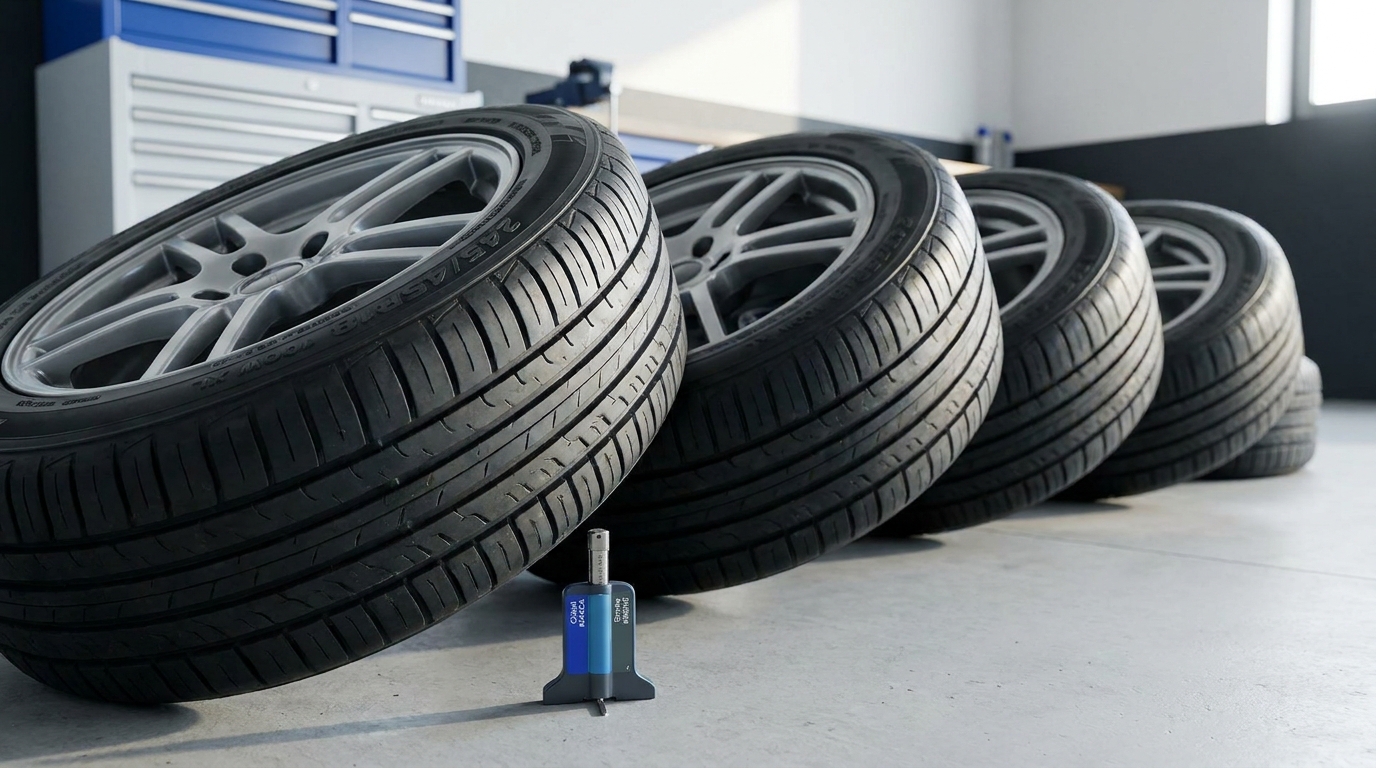
A single replacement may be suitable only when it meets the vehicle and tire makers’ requirements for that exact fitment and the remaining tires’ condition. Check size, specification, wear and rolling-circumference requirements before choosing. There is no tread-difference number in this guide that overrides an AWD or other vehicle manufacturer’s limit.
Why tread depth matters for mixing one new tire
Tread depth affects water evacuation and braking. Michelin’s US guidance uses a 2/32-inch replacement point; applicable legal and seasonal requirements can differ, and built-in wear bars inside the grooves become flush at that limit. At or below this, the tire must be replaced. A tread number does not capture damage, weather or every tire model’s wet-road performance; it is not a safety certificate. Your choice to mix one new tire should consider both legality and your typical weather. [Michelin: Tire tread depth][Michelin: Visual inspection]
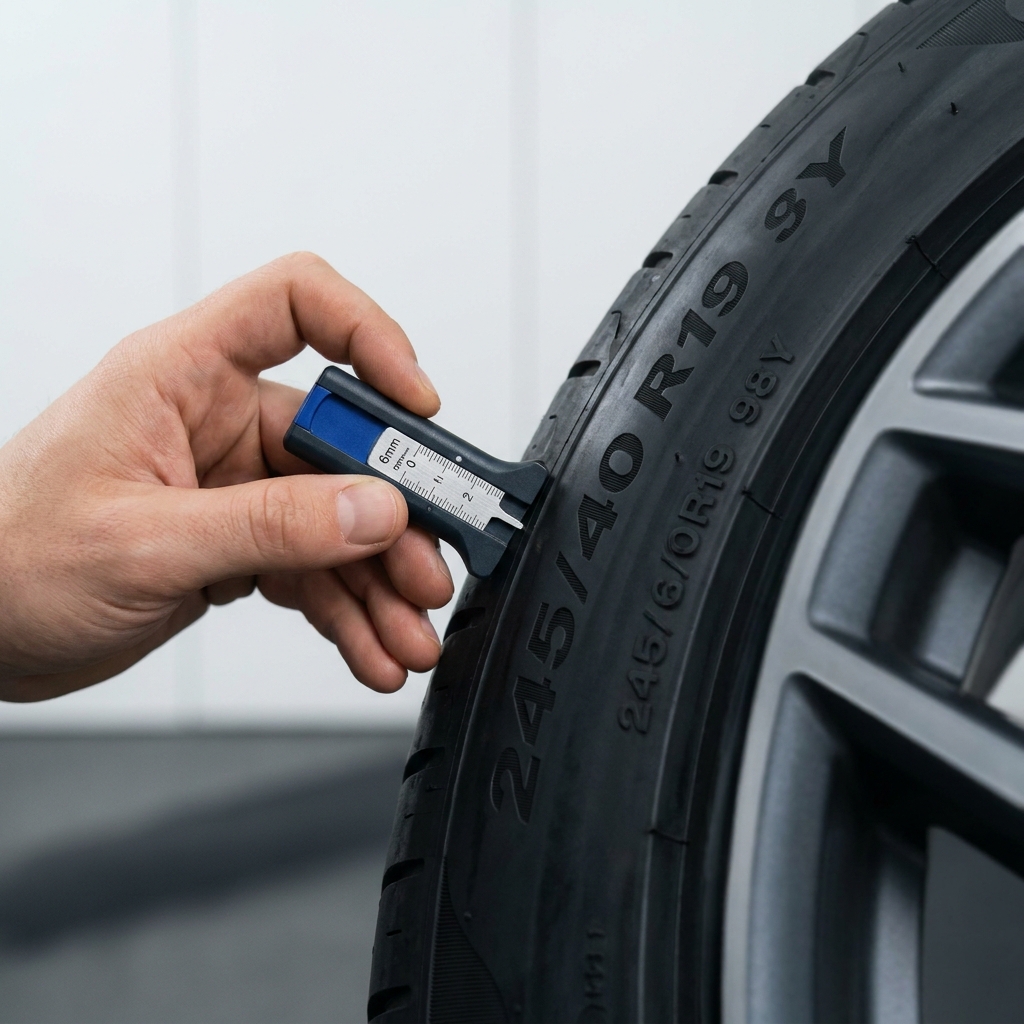
How to measure tread depth accurately at home
Use a tread depth gauge
- Park on level ground and set the parking brake.
- Insert a tread depth gauge into the main grooves and record the reading.
- Measure across the width (inner edge, center, outer edge) and at several points around each tire to catch uneven wear. [Michelin: Tire tread depth]
Or do a quick penny check
- Place a penny into a groove with Lincoln’s head facing down. If you see the top of his head, tread is at or below 2/32 inch and the tire needs replacing. [Michelin: Tire tread depth]
Look for the wear bars
- Find the molded treadwear indicator bars inside the grooves. When the surrounding tread is level with these bars in any groove, that tire needs assessment against its replacement requirement. [Michelin: Visual inspection]
Decide if a single new tire is acceptable
- Match the specified fitment: follow the vehicle and tire maker for each position or axle. Some vehicles specify different front and rear sizes; do not override that arrangement to make all four identical. Avoid mixing types (for example, all-terrain with all-season, or winter with non-winter tires). [Michelin FAQs]
- Check the actual permitted difference: obtain the vehicle and tire maker’s tread or circumference requirements for the exact combination. Do not assume one generic tolerance applies. Keep all tires properly inflated since rolling radius is sensitive to pressure. [Michelin FAQs]
- Follow drivetrain rules: For 4WD/AWD systems, the rolling radius across all four tires must be closely matched to avoid drivetrain stress. If the manual is silent or unclear, ask the vehicle maker or a qualified tire service; do not invent a permissible mismatch. [Michelin FAQs]
- Check all remaining tires against their applicable replacement criteria, damage, age and seasonal needs. Consider earlier replacement if you drive often in heavy rain. [Michelin: Tire tread depth]
When to buy two or four tires instead
- The other three tires are near the wear bars or show uneven wear.
- You can’t match the same brand and model, or the combination would exceed the exact maker’s permitted difference.
- Your owner’s manual requires pairs or full sets on your drivetrain.
Put this into practice
Record all four tyres’ sizes, models, condition and measured tread before seeking fitment advice. Use the exact vehicle’s restrictions; do not treat a generic tread-difference number as permission to fit one replacement.
Check before running one new tire
If depth varies across a tire, fix the cause
- Edges worn more than center: may be associated with pressure or other problems.
- Center worn more than edges: may be associated with pressure or other problems.
- One-edge wear: a possible alignment or mechanical issue.
- Cupping/scalloping: balance or suspension concern. Address the cause before installing a new tire so the pattern doesn’t destroy it. [Michelin: Tread problems]
Related reading at Driven & Kept
- Should tires with 5/32 tread be replaced?
- How do you use the penny trick to check tire tread? A practical guide
Short FAQ
How often should I measure tread depth?
Do a quick check monthly and before long trips; pressure and depth checks together catch issues early. [Michelin: Routine tire care tips]
Do I need a special tool?
A simple tread depth gauge gives precise readings and is a useful measuring tool; the penny test is a rough indication, not a precise depth or legal-compliance measurement. [Michelin: Tire tread depth]
Is 3/32 inch enough to keep one new tire with three old?
3/32 inch is close to the 2/32-inch benchmark discussed here, but local and seasonal requirements differ. Wet braking is already reduced compared with deeper tread. The remaining depth alone does not authorise a single replacement. Ask whether the exact vehicle and tire specifications permit the combination. [Michelin: Tire tread depth][Michelin FAQs]

Optional equipment for this guide
A tread gauge can help you record the existing tyres consistently. It cannot decide whether one replacement is compatible with the vehicle or remaining tyres.
As an Amazon Associate I earn from qualifying purchases. These are researched options, not hands-on test results. Check the exact size or model, current price and availability on Amazon.
| Product option | Fit and limits to check | Retailer |
|---|---|---|
| Product imageMilton S-448 tread-depth gauge | A depth-measurement tool, not a tyre replacement rule. Check its scale and technique, then use the exact vehicle, tyre and local requirements for decisions. | View on Amazon |