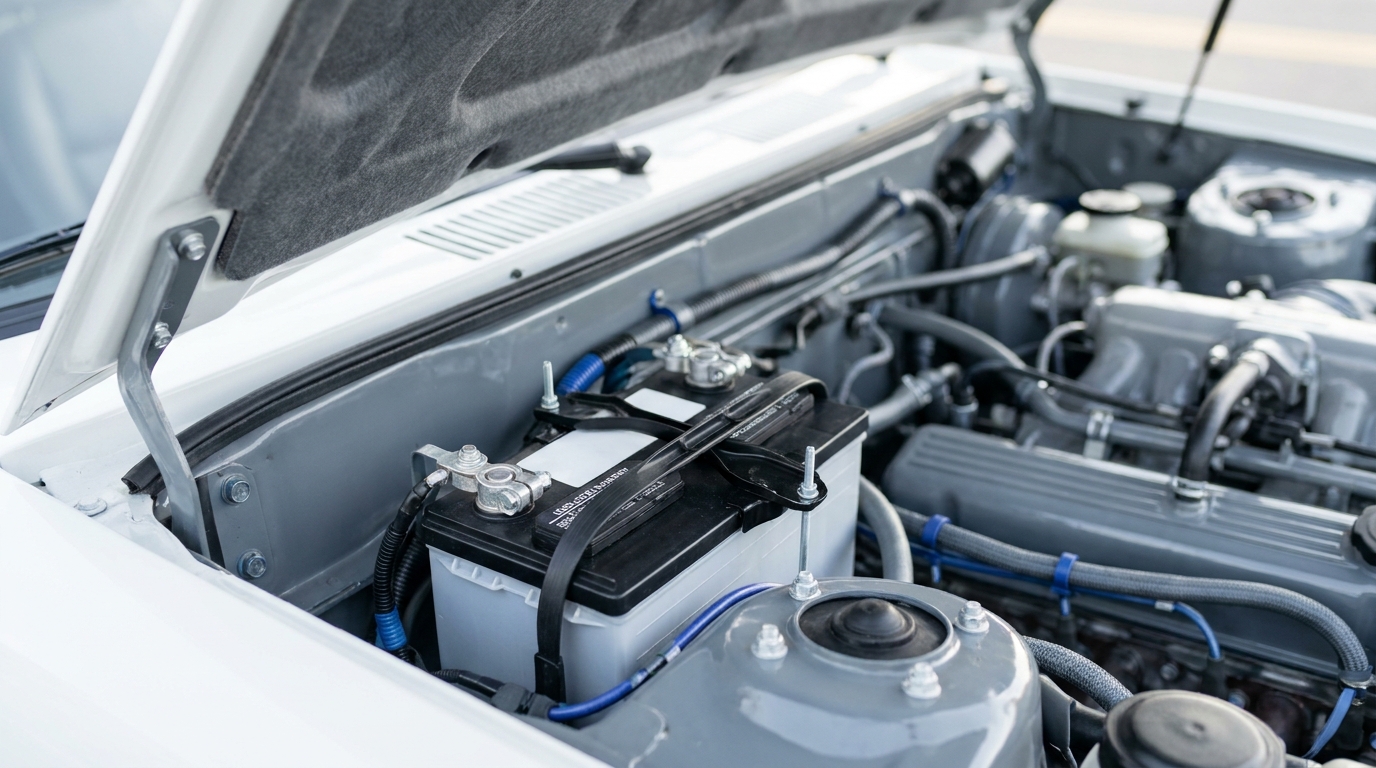
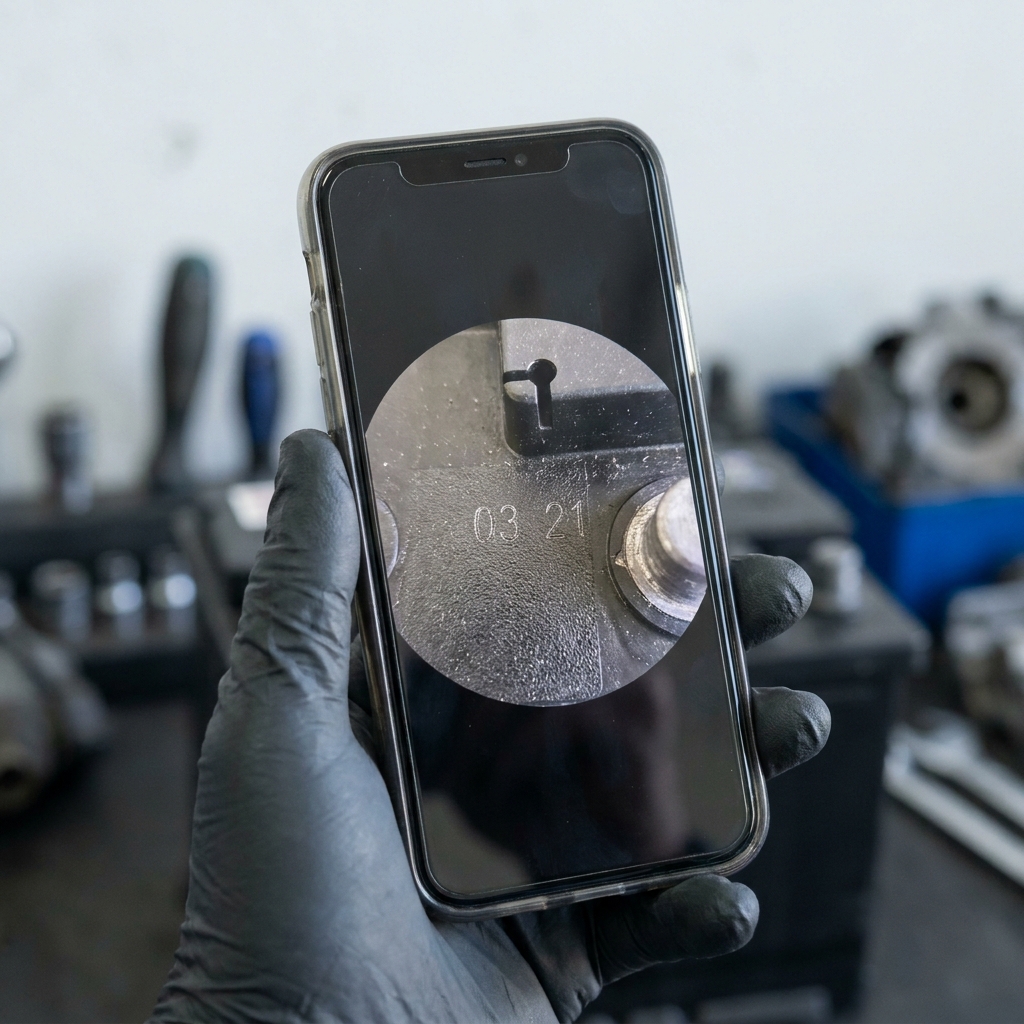
Find an accessible battery marking and decode it with the exact maker’s guide. PowerVolt examples show one scheme; confirm decade and distinguish marked date from installation history.
By Driven & Kept editorial team · · Updated
The date is usually printed on a small sticker or stamped into the battery case. In the Interstate PowerVolt guide’s examples, the case code or sticker records a month and year. Other makers can use different formats. For example, a label like B-23 or 2/23 means February 2023, and codes such as B3CM or 3BCM also indicate February 2023 according to Interstate’s service guide (see examples in the Interstate Powervolt guide). This code is used to determine battery age for testing and warranty checks, not to set your vehicle’s charging behavior. Interstate Powervolt guide.
Where to find the date
Check the battery case for a stamped or molded code. Some brands place it near a corner or along the top edge. If you don’t see it at first, wipe dust from the surface so the markings are legible.
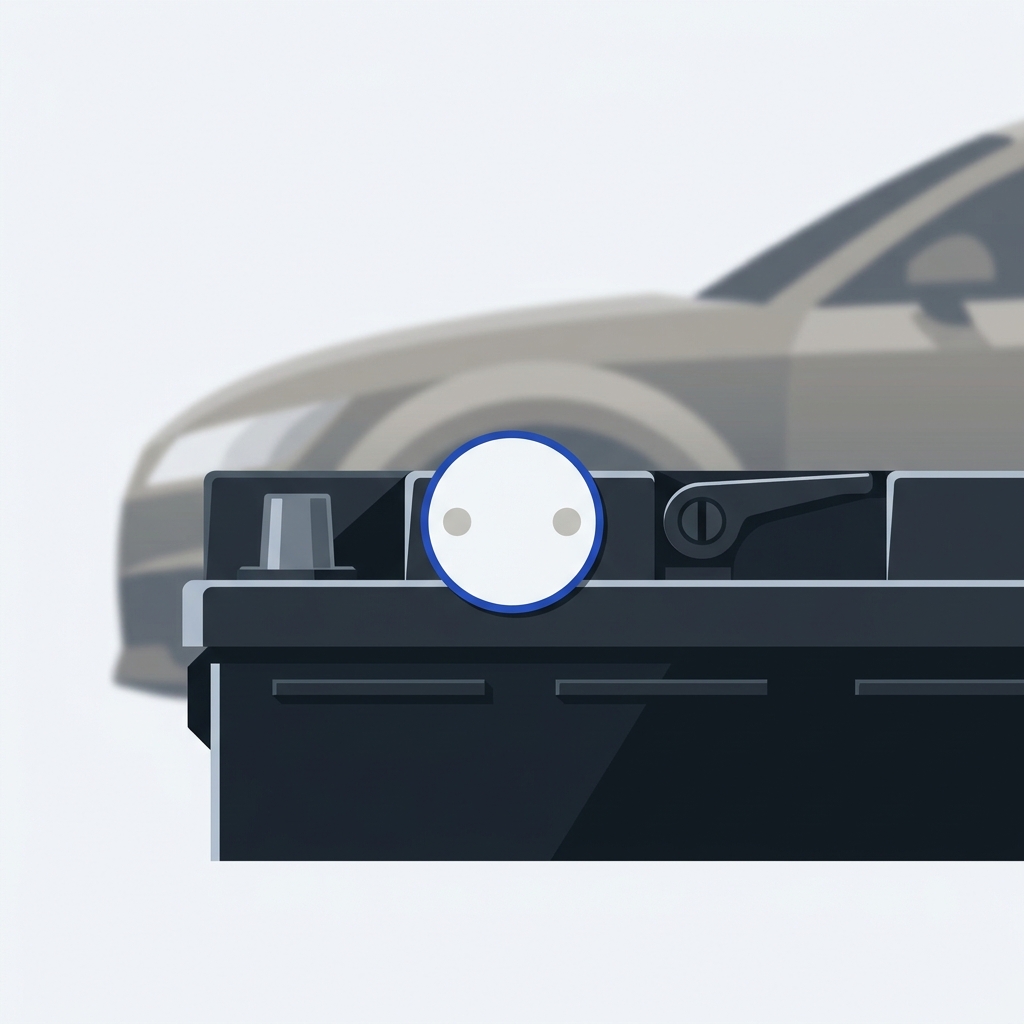
Look for a small sticker showing a short code (e.g., B-23) or a clear month/year (e.g., 2/23). Interstate confirms the age can be read from the case’s first characters or the sticker’s month and year Interstate Powervolt guide.
If no code is obvious, check all visible sides of the case. Some batteries are tucked in trays or covers that hide part of the label; you may need better light to spot it.
How to decode a common battery date code
The following is an Interstate PowerVolt example, not a universal battery-code standard. Interstate’s documentation provides these examples and mappings:
Month letters: A = Jan, B = Feb, C = Mar, D = Apr, E = May, F = Jun, G = Jul, H = Aug, I = Sep, J = Oct, K = Nov, L = Dec.
Year: Appears as the year’s last digits on a sticker (e.g., 23 for 2023) or a single digit in an alphanumeric code on some labels. Interstate shows that codes like B3CM or 3BCM correspond to February 2023, and a sticker like B-23 or 2/23 also reads as February 2023. See the visual examples and month/year tables in the Interstate Powervolt guide.
Quick examples
B-23 or 2/23: February 2023
B3CM or 3BCM: February 2023
Interpretation is based on the month letter (B = February) and the year portion shown next to it. Interstate’s guide shows these specific formats and the A-L month mapping Interstate Powervolt guide.
What if the code looks different?
Manufacturers vary. If the string doesn’t match the examples above, the brand may use a different pattern. Do not apply the A-L table to an unfamiliar code; check that brand’s own guide or ask the retailer.
If you can’t make sense of it, note the full code and ask the retailer or refer to the brand’s documentation. The purpose is the same: determine the battery’s age for testing and warranty evaluation. Interstate explicitly instructs technicians to read the date to determine age before proceeding with diagnostics Interstate Powervolt guide.
Safety tip while you check
Read only an accessible label without moving the battery or disturbing terminals, vent caps or vehicle wiring. Use service records or a retailer’s help if it is hidden. Follow the vehicle and battery safety instructions before any permitted access or cleaning; do not remove a battery just to decode a date Interstate Powervolt guide.
Put this into practice
Photograph the accessible marking, brand and model without disturbing terminals. Keep the marked date and known installation date as separate fields, and ask the maker to resolve an ambiguous code rather than guessing its decade.
Quick checklist: Capture and decode your battery’s date
What does the date tell me? It gives the month and year used to determine the battery’s age for testing and potential warranty consideration. Interstate directs technicians to read the date to determine age before diagnostic steps Interstate Powervolt guide.