
The journal
Will microfiber towels scratch my car paint?
Microfiber can scratch or mark paint when contaminated, rough or used poorly. Check the whole towel and compatible care method; no fabric label guarantees a scratch-free result.
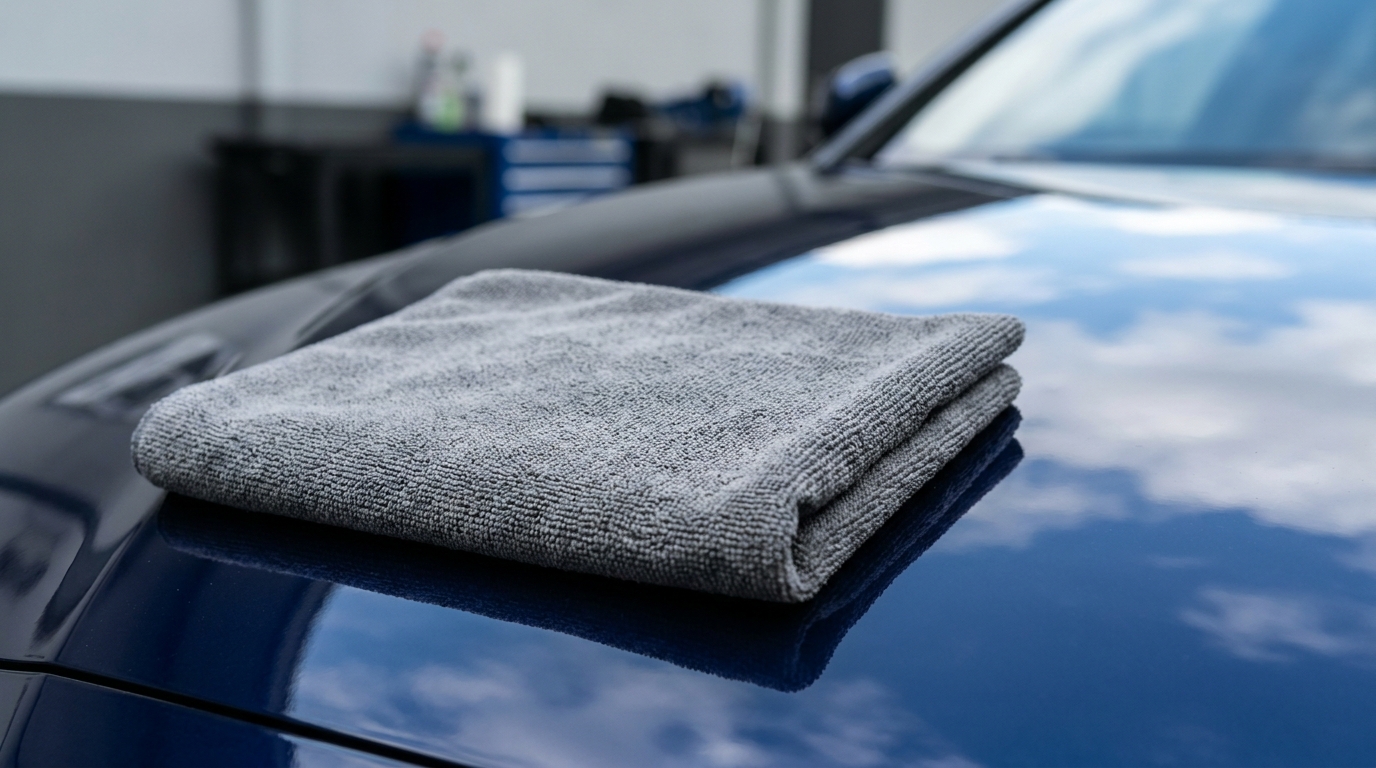
Short answer: Microfiber can mark paint if it carries grit, has rough edges or is used with unsuitable pressure or products. A “microfiber” label alone does not guarantee scratch-free contact. Scratches and swirls usually come from abrasive dirt or residues trapped in the towel, or from poor washing and drying technique, not from the microfiber fibers themselves (Turtle Wax: scratch-free microfiber on paint).
Why the whole towel and method matter
Automotive-grade microfiber is softer than clear coat and designed to lift and hold contamination away from the surface. When used correctly, it reduces the risk of dragging grit across paint (Chemical Guys: why microfiber protects paint). Do not treat a maker’s scratch-free marketing language as a guarantee for every finish; inspect the actual cloth and follow compatible surface-care instructions (Turtle Wax).
When can a microfiber towel cause swirls?
- Contamination in the towel: Road grit, brake dust or salt caught in the pile can scour clear coat during wiping (Turtle Wax).
- Harsh edges or tags: Labels and rough stitched edges can mark delicate finishes. Remove tags before first use and prefer paint-safe edge construction for final wiping (Turtle Wax; Chemical Guys).
- Poor technique: Low-lubricity washing (e.g., dish soap), scrubbing pressure, or rarely rinsing a mitt can grind particles into paint (Meguiar’s Car Care Tips, pp.1-2; Turtle Wax).
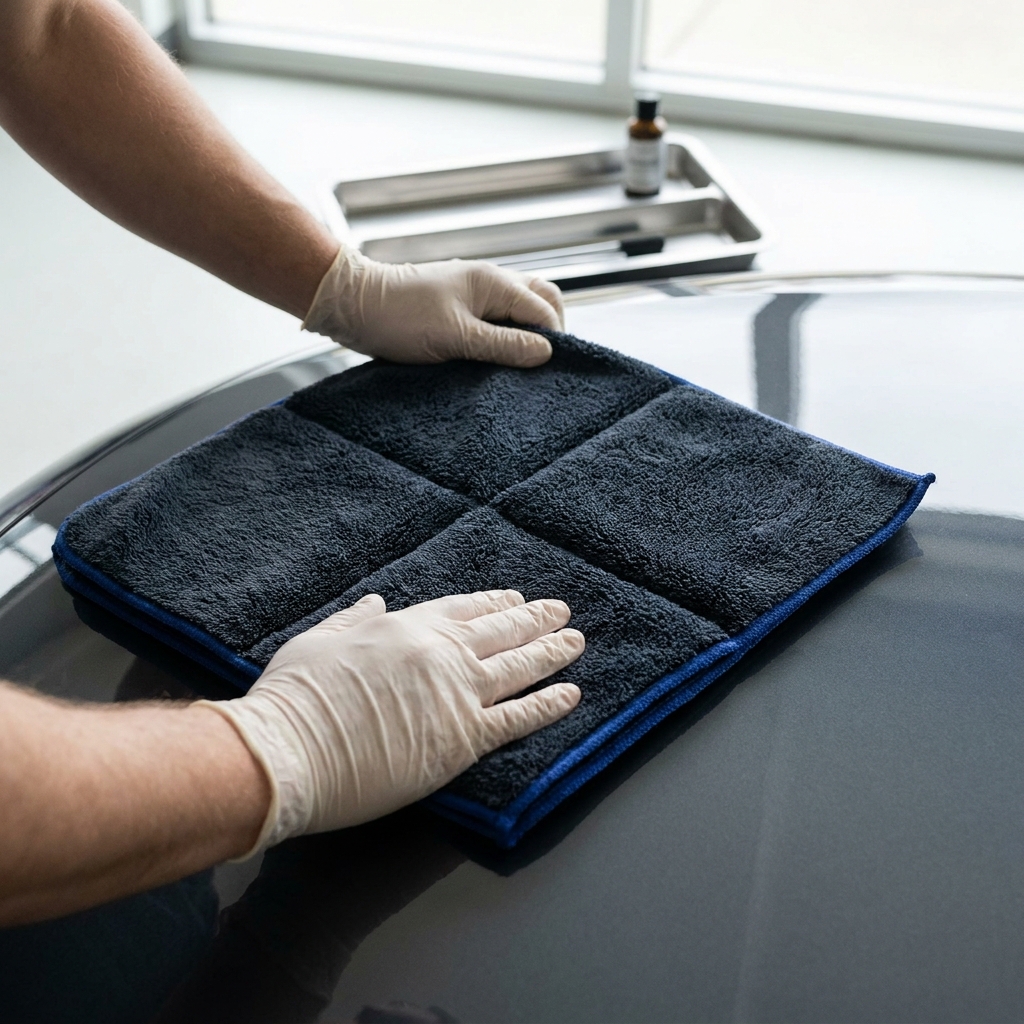
Choose and wash towels to keep them paint-safe
Pick the right towel
- Density (GSM): GSM is mass per area, not a guarantee of surface compatibility or cleanliness. Inspect the pile, edges and intended task as well (Turtle Wax).
- Match towel to task: Use plush, high-pile towels for drying and edgeless or soft-bordered towels for final buffing. Reserve lower-pile towels for interiors or glass (Chemical Guys).
- Color-code and separate by area: Keep paint-only towels away from wheel or engine work to prevent cross-contamination (Chemical Guys).
Wash and dry the right way
- Wash before first use: Remove the tag and wash new towels to clear manufacturing residues (Turtle Wax).
- Wash separately: Launder microfiber by itself to avoid cotton lint and contamination. Avoid fabric softeners and dryer sheets; they reduce absorbency and can leave streaky residue (Turtle Wax).
- Skip bleach and high heat: Avoid bleach and tumble drying on hot; air drying is best for maintaining softness (Meguiar’s Car Care Tips, p.2).
Need step-by-step laundry settings and dosages? See our practical guide: Can you put microfiber towels in a washing machine? A practical guide. After laundering, store towels clean and covered so they don’t pick up dust between uses: The best way to store microfiber towels.
Technique matters during washing and drying the car
- Pre-rinse thoroughly: Use an appropriate, maker-compatible rinse from the roof down to remove as much loose dirt as possible before any contact (Turtle Wax).
- Use a dedicated car wash soap: Dish liquids strip protection and lack lubricants. Choose a car shampoo for foam and slip to encapsulate dirt (Turtle Wax; Meguiar’s, p.1).
- Rinse your mitt often: Squeeze out soils and reload with soapy solution at least every small section to avoid grinding grit (Turtle Wax).
- Use a grit guard and clean tools: Keep debris at the bottom of the bucket and use dedicated, clean towels only (Meguiar’s, pp.1-2).
- Dry with minimal contact: A clean, plush microfiber drying towel works, but a suitable vehicle-drying blower is another option when used according to its instructions. Keep a protective wax layer to reduce friction and the need for heavy wiping (Turtle Wax).
Put this into practice
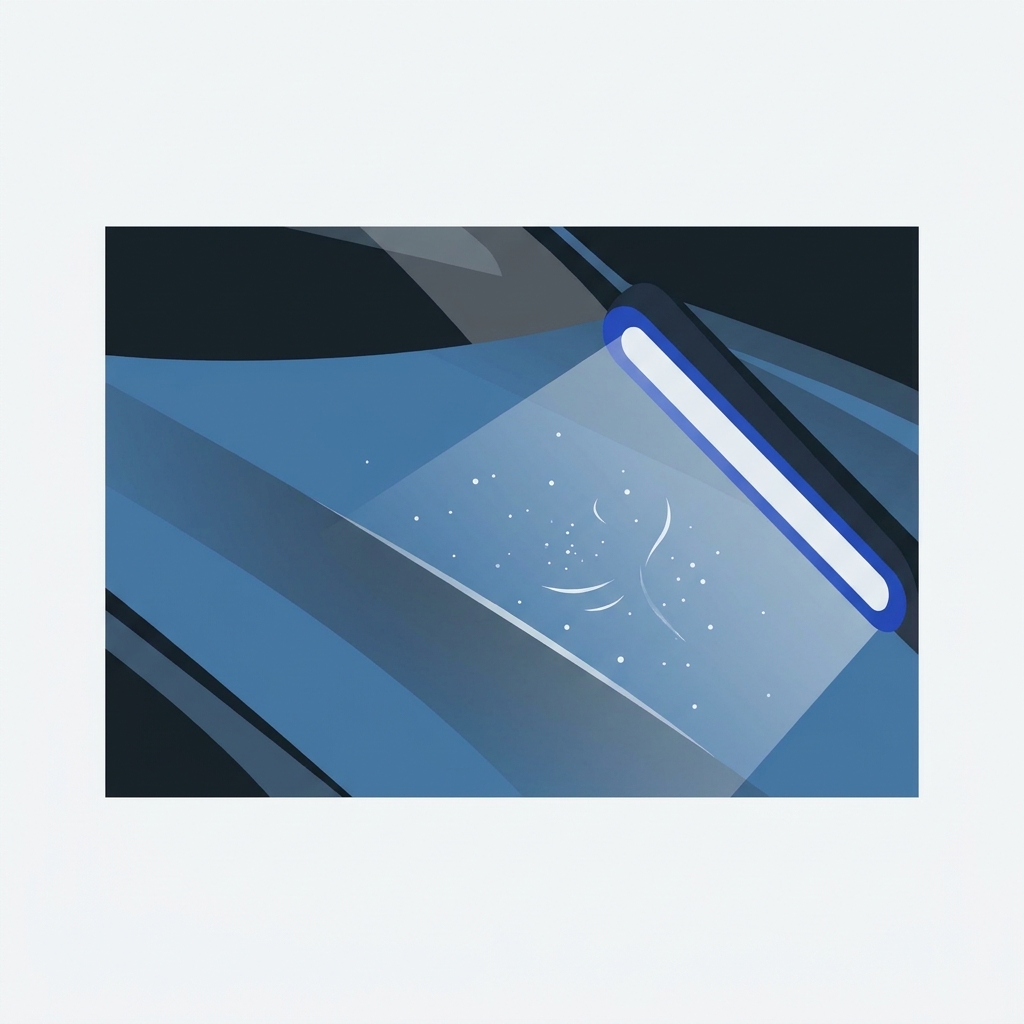
Inspect both the surface and towel before touching the paint. Retire a contaminated face from that task instead of relying on a fibre label or a scratch-free claim to make debris harmless.
Quick pre-use checklist for paint-safe microfiber
FAQ
Can old microfiber scratch paint? Yes, if the fibers have hardened, lost absorbency, or hold embedded grit. Replace towels that feel rough, shed fibers, or won’t absorb well (Chemical Guys).
Should I machine-dry microfiber? Air drying is safest. If you machine-dry, avoid high heat and skip dryer sheets or softeners to preserve absorbency and finish (Meguiar’s, p.2; Turtle Wax).
From Brand Driven & Kept: keep your towels clean, your wash lubricated, and your technique gentle. Clean tools and compatible methods reduce risk; they do not create a universal scratch-free guarantee.
