
Choose an inflator that suits the vehicle’s power supply, required pressure range and tyre application, then check hose reach, gauge units and operating limits. The correct inflation target comes from the vehicle’s label or manual, not a generic number on the tool.
Choose by the job
| Decision | Why it matters | What to check |
|---|---|---|
| Target pressure | Vehicle-specific and condition-dependent | Read the placard or owner’s manual |
| Power | Must suit the approved supply | Check connector and electrical requirements |
| Reach | Every required valve must be accessible | Check the full hose and cable arrangement |
| Operating limits | Inflation time and rest periods vary | Read the actual device manual |
The tyre target comes from the vehicle
An inflator’s maximum pressure is not the pressure your tyres should use. NHTSA points owners to the vehicle’s recommended cold inflation pressure on its placard or in the manual, rather than the maximum printed on the tyre sidewall. Keep the vehicle guidance at hand before comparing equipment.
Check power and reach together
Compare the inflator’s power source, cable or hose reach and permitted duty cycle. If it uses the vehicle’s power socket, verify that arrangement against the product and vehicle instructions. A pump that cannot reach the relevant wheel or needs a cooling pause you overlook is not a good match for the task.
Read the display and preset carefully
Check the pressure units and how the product sets a target. PSI, bar and kPa are different scales. Automatic shutoff is a convenience feature, not a reason to skip the recommended checking procedure or assume the gauge is perfect. Follow the inflator’s instructions and verify pressure with suitable equipment.
Separate routine checking from a fault
An inflator is not a repair for a puncture or damaged tyre. Repeated pressure loss, visible damage or a warning that does not resolve needs the appropriate assessment. Store the inflator and accessories as directed, and keep it accessible for the routine checks it is intended to support.
Make the choice useful
Look for a clearly readable gauge with the units you use and understand how any automatic stop function is set and verified. Follow the device’s operating and storage instructions. An inflator does not repair a damaged tyre or explain a recurring loss of pressure. Have unexplained pressure loss or visible damage assessed rather than treating repeated inflation as the solution.
Before the next session
Use the vehicle manufacturer’s recommended pressure for the application, found on the vehicle label or in its manual. NHTSA distinguishes this from the tyre sidewall rating and recommends checking pressure when tyres are cold. Follow the relevant vehicle guidance.
ILLUSTRATIVE EXAMPLE
A practical example
Before shopping, identify the vehicle’s recommended cold pressure and where the power connection is located. Map the route to each wheel and any spare you intend to check. A high advertised maximum pressure does not show whether the device is convenient or suitable for that job.
Your next steps
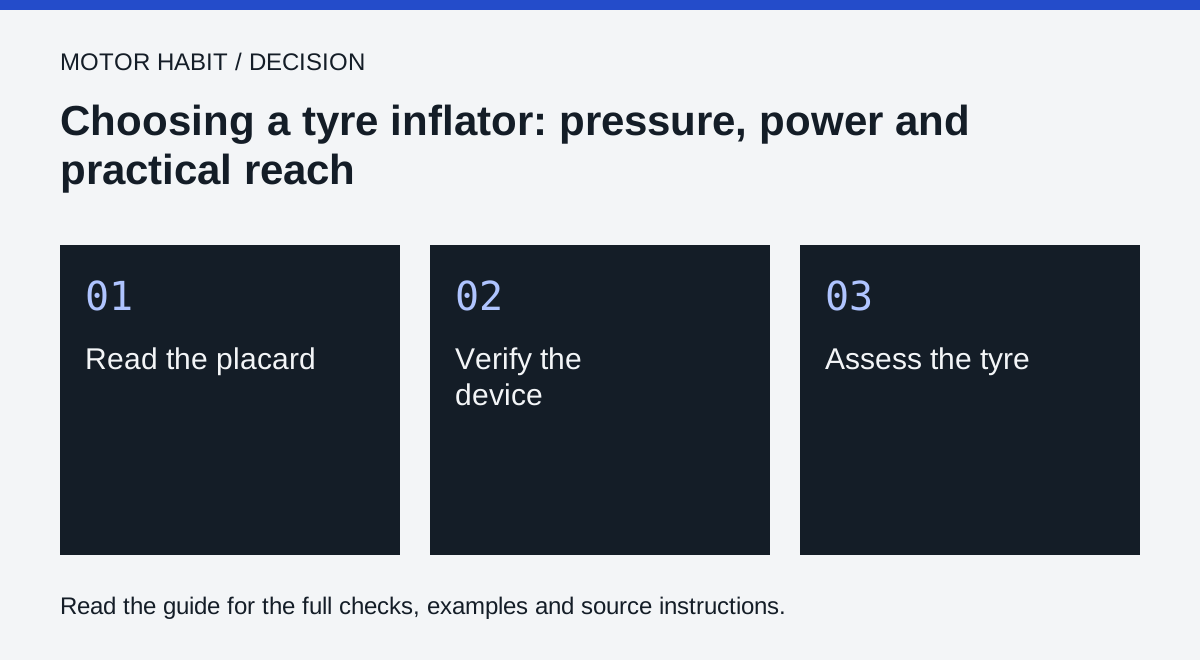
- Read the placard: establish the vehicle target
- Verify the device: check power and reach
- Assess the tyre: resolve damage or pressure loss
Questions that come up
Should I use the maximum pressure on the tyre?
Use the vehicle manufacturer’s recommended pressure for the relevant tyres and conditions, as specified on the placard or in the manual.
What does cold pressure mean?
NHTSA describes a cold tyre for its checking guidance as one not driven on for at least three hours. Follow the vehicle’s instructions.
Should I inflate to the maximum pressure on the tyre sidewall?
Use the vehicle manufacturer’s recommended pressure for the application, found on the vehicle label or in its manual. NHTSA distinguishes this from the tyre sidewall rating and recommends checking pressure when tyres are cold. Follow the relevant vehicle guidance.
Sources and further reading
Source references for this edition, September 8, 2026. Recheck changeable rules and the exact product or vehicle instructions before acting.