
Preserve the original surface appearance and function. Identify the finish, use a compatible product and apply it as directed with controlled moisture. Avoid leaving residue on controls, pedals or other surfaces where grip and visibility matter.
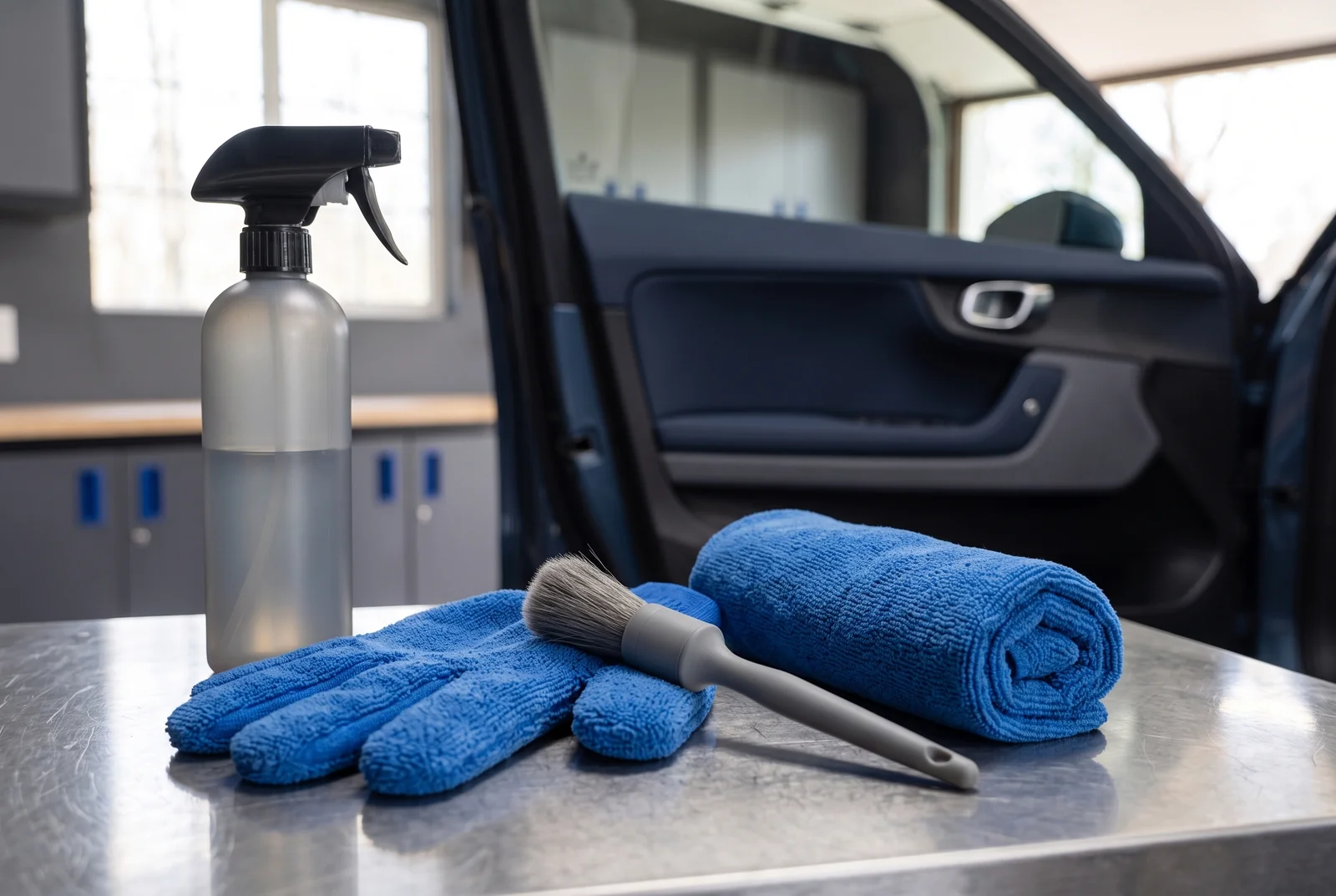
Choose by the job
| Decision | Why it matters | What to check |
|---|---|---|
| Surface finish | Coatings and soft-touch finishes vary | Check the vehicle guidance |
| Application | Spray can reach gaps and controls | Use the product’s directed method |
| Tool | Stiff or dirty media can damage a surface | Choose clean, suitable materials |
| Residue | Can change glare or feel | Inspect the dry result |
Not every dark panel is the same material
A dashboard can combine hard plastic, soft-touch coatings, gloss trim, display glass and painted buttons. Treat them as different surfaces. Identify the section in the owner’s manual instead of assuming a product called “interior cleaner” covers them all.
Begin with a controlled wipe
Remove loose dust using a suitable clean cloth or soft tool. Use only the cleaner and moisture level allowed for that surface. Apply it in a controlled way, keeping liquid away from switches, vents, seams and electronics. A discreet test should include checking the fully dried appearance.
Keep touchscreens separate
Display coatings can be damaged by cleaning methods acceptable on ordinary glass. The Tesla Model 3 manual, for example, gives a separate screen procedure; use your own model’s instructions. A screen-clean mode prevents accidental controls, but it does not make an incompatible cleaner safe.
Aim for clean, not slippery
A shiny finish is not a useful goal on every cabin surface. Keep coatings and dressings away from controls and areas that need reliable grip. If an old soft-touch coating is breaking down, stop and seek material-specific advice rather than scrubbing harder and removing more of it.
Make the choice useful
A glossy-looking finish is not automatically a better result. Evaluate a dressing by its approved uses, application method and final appearance, rather than applying it to every dark panel. Keep screens, transparent instrument covers and coated trims in their own care category. When buying brushes or cloths, consider access to seams and the ability to keep the tools clean between jobs.
Before the next session
Do not apply a product that leaves a slippery residue to grip or control surfaces. Follow the vehicle instructions and the product’s explicit approved uses. A product intended to improve the appearance of trim is not automatically suitable for steering controls or pedals.
ILLUSTRATIVE EXAMPLE
A practical example
A dusty textured panel and a sticky, deteriorating coating are different problems. If the surface itself is breaking down, more cleaner may not restore it. Stop when you see colour transfer, lifting finish or an unexpected change, and establish what material or coating you are dealing with.
Your next steps
- Identify the coating: separate panels and screens
- Clean with control: follow the label
- Inspect dry: check appearance and residue
Questions that come up
Can glass cleaner go on an infotainment screen?
Only if the screen maker explicitly permits that product and method. Screen coatings differ from ordinary window glass.
Does a glossy dashboard mean it is cleaner?
No. Cleanliness and added shine are different; preserve the original finish and control grip.
Should I dress the steering wheel and pedals?
Do not apply a product that leaves a slippery residue to grip or control surfaces. Follow the vehicle instructions and the product’s explicit approved uses. A product intended to improve the appearance of trim is not automatically suitable for steering controls or pedals.
Sources and further reading
Source references for this edition, September 8, 2026. Recheck changeable rules and the exact product or vehicle instructions before acting.