
Plan drying before washing, work within the products’ conditions and use clean, suitable media. Smaller manageable sections and attention to water-retaining gaps can help. Persistent deposits require a separate surface-compatible assessment, not harder rubbing with a drying towel.
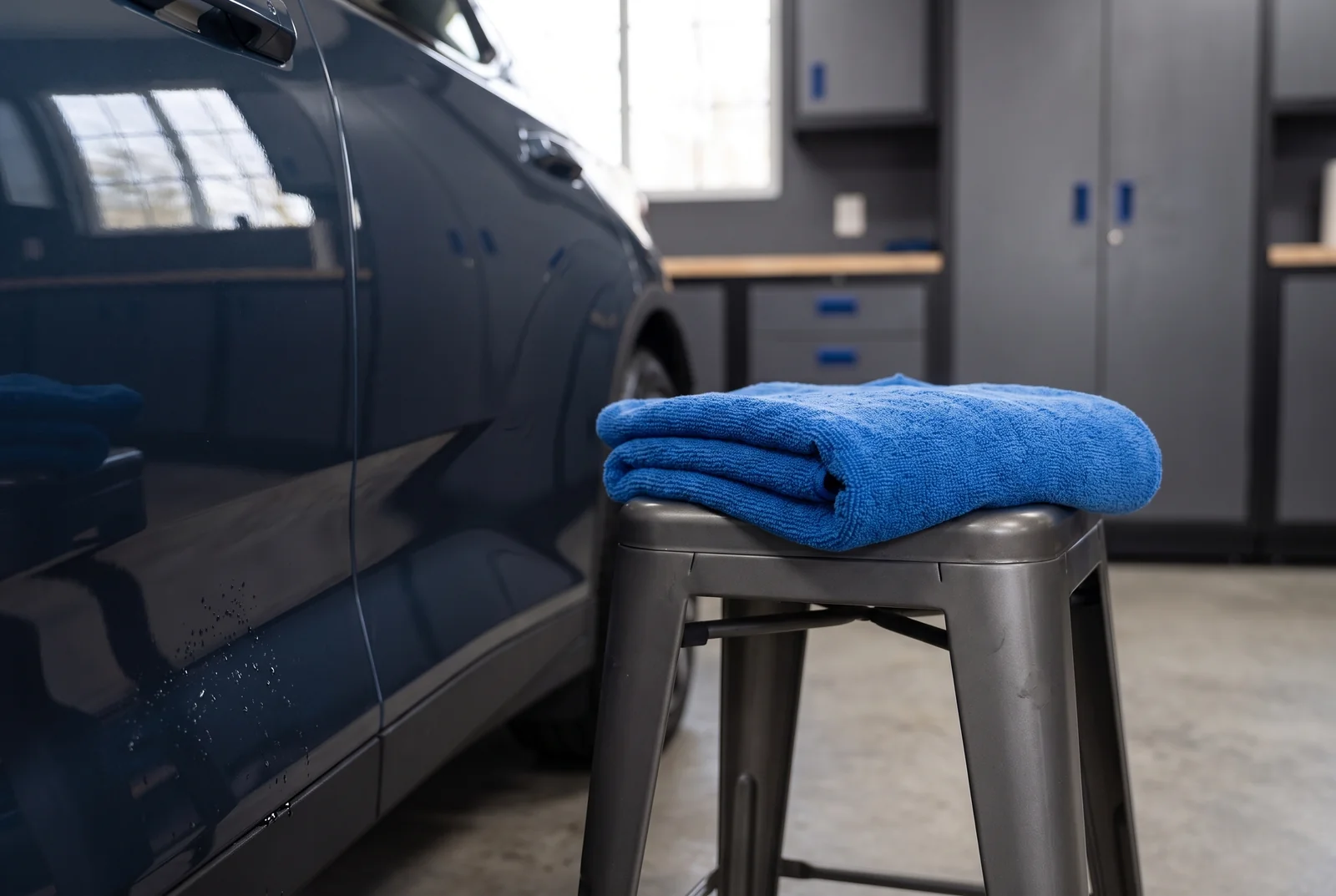
Choose by the job
| Decision | Why it matters | What to check |
|---|---|---|
| Working conditions | Water may dry before you reach it | Choose a manageable session |
| Towel condition | Dirt can transfer during drying | Inspect clean media |
| Panel size | Controls how much remains wet | Work in a practical sequence |
| Gaps and trim | Water can emerge after the first pass | Recheck without forcing tools |
Make drying part of the wash plan
A wash is not finished when the shampoo is rinsed away. Plan enough time, towels and suitable conditions to dry the car. A large vehicle in direct heat may dry unevenly faster than you can work; change the setup before starting rather than chasing marks afterwards.
Use a clean, suitable drying towel
Follow the towel maker’s intended use and keep the cloth free of grit. Reposition to a clean face and replace it when necessary. Do not use pressure to remove a mark that should have been addressed during cleaning. Drying should not become improvised polishing.
Give glass and crevices their own attention
Use a dedicated clean glass towel so you do not spread wax or dressing residue. Water can collect around trim and emerge after the first pass. Inspect gently without pushing tools into seals or unfamiliar openings. Follow any film or coating instructions that apply.
Review the result in changing light
Look for remaining soil, streaks and spots before applying another product. A persistent mineral mark may need a separate surface-specific assessment. Record what you noticed and adjust the next wash conditions. One controlled follow-up is better than repeatedly rubbing a drying towel over the same patch.
Make the choice useful
A larger or more absorbent towel can help organize the job, but it does not remove the need for compatible products and sensible conditions. Keep the towel clear of gritty ground and contaminated surfaces. If using a blower, follow the equipment and vehicle guidance and avoid treating high-pressure air as safe for every opening or delicate area. Finish by checking the dry surface under useful light.
Before the next session
Follow the exact product’s directions and intended use. A drying aid may be part of a compatible routine, but it is not permission to let contaminated water or product residue dry wherever it lands. Inspect the result and keep the process suitable for the finish.
ILLUSTRATIVE EXAMPLE
A practical example
On a session where surfaces are drying faster than you can finish, reduce the working area or change the conditions within the product guidance. Adding pressure to the towel does not reverse dried mineral deposits. Treat an existing mark as a separate question from removing fresh rinse water.
Your next steps
- Plan the conditions: leave time to finish
- Use clean media: control contamination
- Inspect the result: separate deposits from water
Questions that come up
Is air drying always enough?
It can leave deposits as water evaporates. A suitable controlled drying step helps reduce remaining water.
Should I rub harder on a spot while drying?
No. Identify and treat the cause with an appropriate method rather than turning drying into abrasive cleaning.
Can a drying aid replace all the drying work?
Follow the exact product’s directions and intended use. A drying aid may be part of a compatible routine, but it is not permission to let contaminated water or product residue dry wherever it lands. Inspect the result and keep the process suitable for the finish.
Sources and further reading
Source references for this edition, September 8, 2026. Recheck changeable rules and the exact product or vehicle instructions before acting.